




The Switch: Challenging the Catamaran Stereotype
For many sailors, the move from monohull to a catamaran represents more than just a change in vessel, it’s a shift in mindset, technique and experience. While both types of boats share the same fundamental principles of sailing, the differences in design create a change in handling characteristics, performance profiles and onboard lifestyles. So why are sailors changing from Mono’s to Multi’s, Comfort? Space? Safety? There are so many reasons for the switch, but the changes aren’t based on one being better than the other, they are based on what works best for you, your family, your friends and your plans.
Catamarans have long carried the stereotype of being the choice for those who value comfort over tradition and performance, earning labels such as the “floating apartment” or even a “booze cruise”. A common joke among sailors is that monohull owners brag about surviving storms, while catamaran owners brag about sleeping well. While there may be some truth in the idea that catamarans offer greater comfort, today’s multihull manufacturers are increasingly pushing the limits of performance, with some successfully blending speed, capability, and luxury.
Performance catamarans excel in combining speed, stability and comfort, making them particularly well suited to long distance cruising, passage-making and round the world sailing. They are generally capable of maintaining higher average speeds over extended periods than a monohull, especially in reaching and downwind conditions. The majority of catamarans will offer a shallower draft, providing access to anchorages and coastal areas that deeper-keeled yachts cannot reach. However, perhaps their greatest advantage is their ability to blend performance with liveability, offering generous onboard space and comfort, making them an attractive option for sailors seeking both capability and practicality.
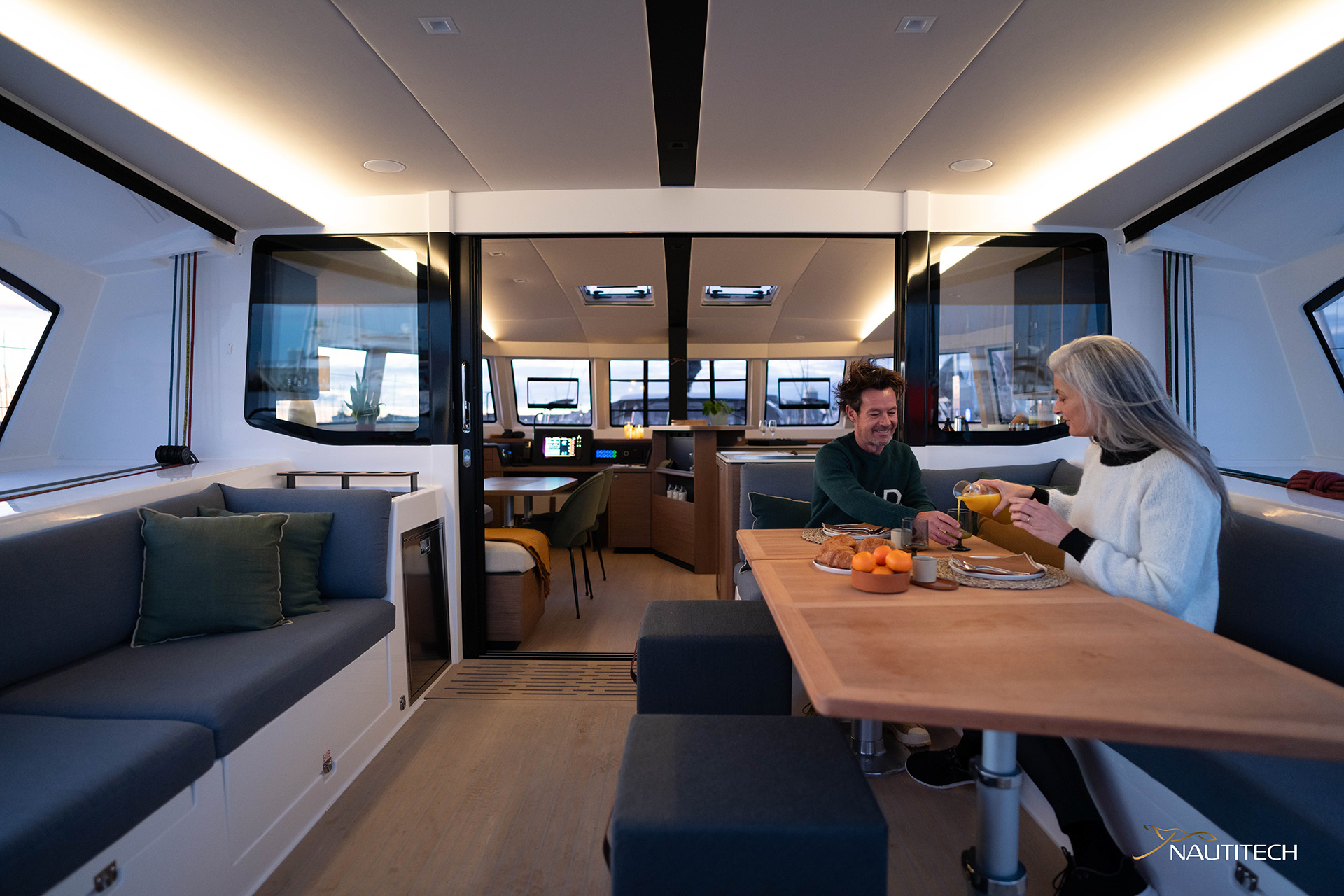
N48 Open Plan Interior
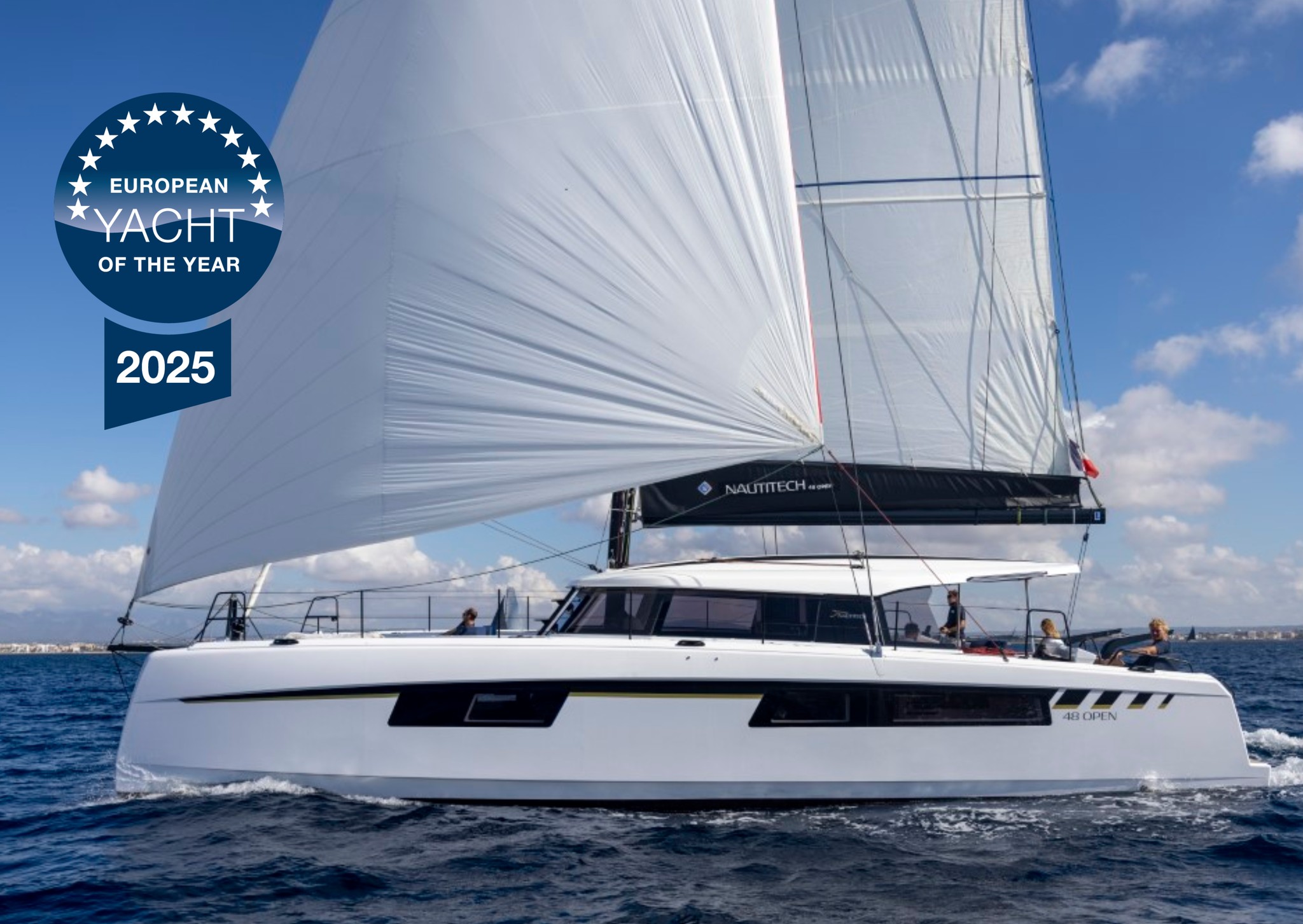
N48 Sailing
The multihull market has expanded enormously over the last 15 years, evolving far beyond the traditional perceptions many sailors once held. On one side of the market, brands such as Lagoon and Fountaine Pajot dominate production numbers and the global charter industry. These are often the catamarans people picture when thinking of the classic stereotype spacious, comfort-focused cruising platforms designed for life aboard and holiday sailing. At the other end of the spectrum sit brands such as HH Catamarans (Easily hitting 20+ knots in peak conditions), Gunboat (regularly finishing ahead of mono’s in offshore racing), and Dazcat (Dominating UK multihull racing), whose boats are seen competing and competing successfully in offshore races around the world. In many cases, these high-performance multihulls finish well ahead of monohulls, challenging long-standing assumptions about what catamarans are capable of.
Sitting between these two extremes is Nautitech, a builder that has carved out a distinctive niche by balancing comfort with genuine sailing performance. Nautitech combines luxurious interiors with generous indoor and outdoor living spaces, while maintaining a performance-oriented feel throughout the boat. Backed up by real-world sailing figures, many owners report regularly achieving double-digit speeds and switching off engines in as little as 4–5 knots of wind. Unlike some high-volume production yards, Nautitech remains strongly owner-focused, producing a relatively limited number of boats each year to prioritise build quality, craftsmanship, and construction standards. The result is a catamaran aimed at sailors who want more than just comfort offering a platform designed to be lived aboard, enjoyed, and, importantly, sailed.

NEW 2026: N41 Type S
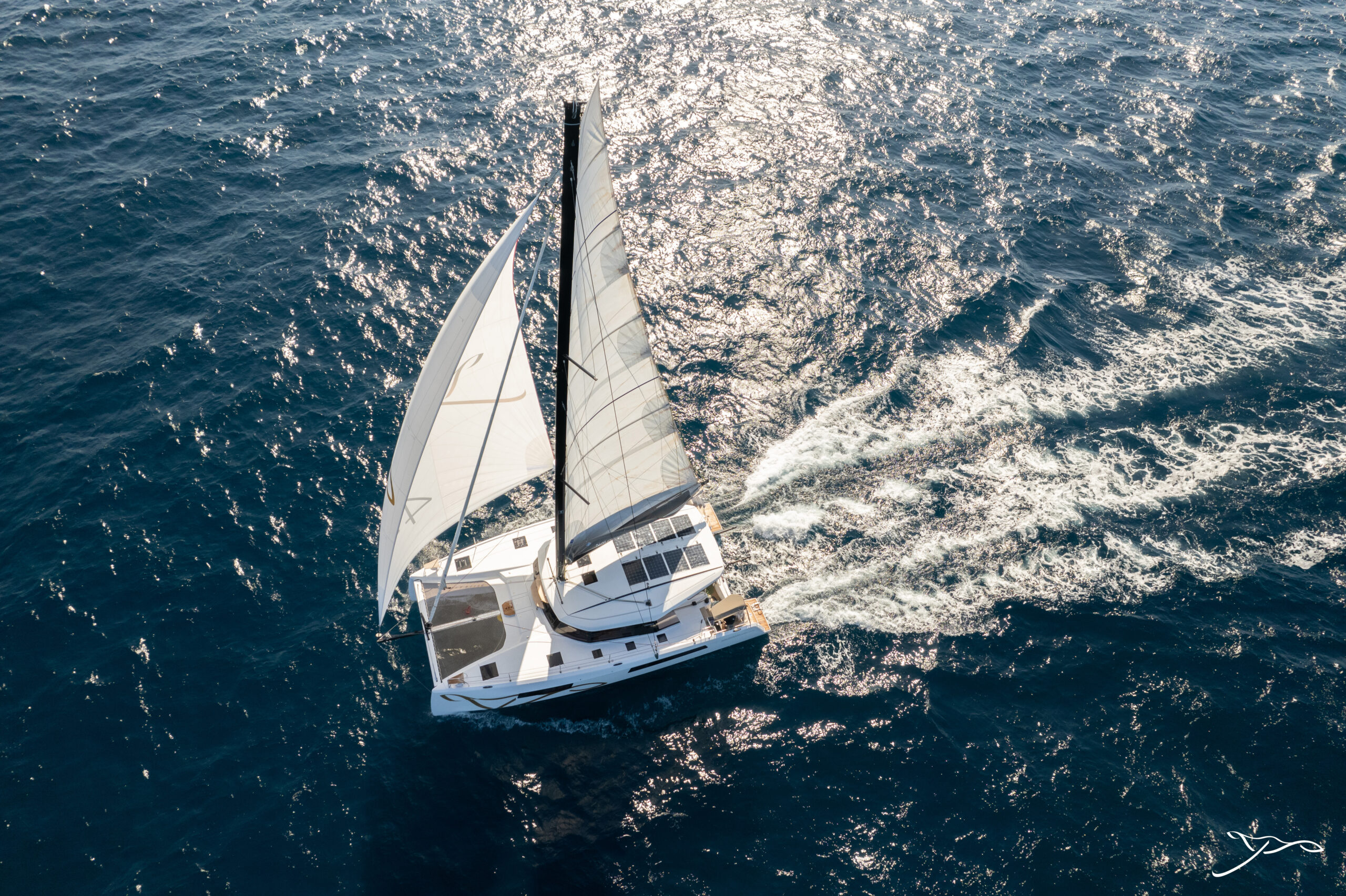
N44 Sailing
The performance in a catamaran comes from the combination of reduced drag, lighter weight, hull design and sail efficiency. Unlike monohulls, catamarans have two narrow hulls, which move through the water with less resistance and create lower drag at higher speeds. Their wide beam provides stability without relying on a heavy ballast keel, meaning they can often be built lighter for their size. Performance-focused catamarans also tend to have higher sail-area-to-weight ratios, allowing them to generate more speed from available wind. Advanced materials such as carbon fibre, lightweight composites, and refined hull shapes further improve responsiveness and efficiency. Because catamarans sail flatter rather than heeling significantly, more of the sail’s power can be converted into forward motion instead of being lost to excessive lean.
How is the maritime world responding to the boom of catamarans around the world, well the marinas have adapted with wider berths, improved facilities, and services designed for multihulls, and as the sailing industry expands charter programs, shared ownership models, and easier-to-use technology, catamarans are becoming far more accessible than they once were. What was previously seen as a specialist or luxury option is increasingly available to a wider range of sailors, from first-time owners to long-term cruisers. Combined with growing support networks and a stronger second-hand market, these changes are helping transform catamaran ownership from an exclusive aspiration into a more realistic and attainable lifestyle.
Is it safe to say that modern catamarans are beating the stereotype? You tell me…….
If you’ve been thinking about making the switch to a catamaran, now is a great time to explore your options. Whether you’re looking for a brand-new performance cruiser or a proven pre-owned model, our team can help you find the right boat for your sailing plans and lifestyle. Get in touch with Seb today for an informal chat about the current market. We currently have three new production boats available, alongside a selection of quality pre-loved catamarans on our brokerage, offering options to suit a range of budgets and requirements.
Seb Combes
Nautitech Brand Manager & Broker
E: seb.combes@keyyachting.com
M: +44 (0)7821 667950
T: +44 (0)23 8045 5669